UPSC CSE 2029 · Offline Classroom · English Medium
UPSC GS Full Syllabus Course 2029 – Offline Classroom
Build your UPSC CSE 2029 preparation through face-to-face General Studies classes at ClearIAS Academy, Kowdiar, Thiruvananthapuram. The Topmost Plan is designed for early starters who want a structured classroom routine, direct academic interaction, recorded backup, organised study materials, tests, current-affairs support, answer-writing guidance and mentorship across Prelims, Mains and Interview preparation.
- English-medium classroom classes at ClearIAS Academy, Trivandrum
- A long preparation horizon for the UPSC CSE 2029 attempt
- General Studies coverage linked to Prelims, Mains and Interview
- Direct academic guidance and a preparation-focused peer environment
- Recorded backup for revision and continuity after unavoidable absence
- Study materials, tests, current affairs, CSAT, Essay and mentorship support
Confirm the latest batch commencement, timetable, seat availability, campus arrangements, validity, instalment options and purchase-page conditions before payment or relocation. Digital activation and classroom onboarding may follow separate processes.
A long-term classroom foundation
Choose the 2029 Topmost Plan When a Physical Routine Will Strengthen Your Preparation
A distant target year can create either a major advantage or a long period of unfocused preparation. This classroom course is intended for aspirants who can attend the Thiruvananthapuram campus consistently and use the additional time for foundation-building, repeated revision, gradual answer-writing development and systematic test practice.
This plan is particularly suitable when you need:
- A fixed learning environment that separates preparation from daily distractions
- Face-to-face explanations while building core General Studies concepts
- External accountability during a multi-year preparation cycle
- Recorded support without depending entirely on self-paced online learning
UPSC CSE 2029
Offline Classroom Topmost Plan · English Medium
A long-horizon classroom General Studies program with direct instruction, recorded backup, structured resources, tests and guidance for the 2029 examination cycle.
₹1,09,999
Limited Period Offer
Campus: ClearIAS Academy, Kowdiar, Thiruvananthapuram
Course validity: Until 31 October 2029
Validity may be extended further on payment of the applicable extension fee, subject to the policy available at that time.
Access: Available digital resources may be activated after successful payment; classroom participation follows the current batch schedule and onboarding instructions.
Pay the complete course fee in a single payment to receive an additional ₹2,000 discount. Use code SAVE2000 at checkout. This offer is applicable only for one-time payment of full fees and does not apply to instalment payments.
How to get the Instalment Option: Scroll to the bottom of the payment page and select the instalment plan. Students may pay the course fee in three instalments, with a gap of 30 days between each payment.
Choose the target year realistically
Select 2029 When It Is Your Earliest Serious and Eligible UPSC Attempt
The right target year should reflect eligibility, graduation, age, work responsibilities and the time required to prepare sincerely. Starting for 2029 can be valuable for an undergraduate student or an early starter, but only when the longer runway is divided into clear stages rather than treated as unlimited time.
Build Concepts Before Speed
Develop a dependable understanding of Polity, Economy, History, Geography, Environment and other core areas before the attempt-focused phase demands rapid recall.
Develop Skills Gradually
Introduce MCQs, CSAT, answer writing, Essay and test analysis progressively instead of postponing every examination skill to the final year.
Complete Optional Earlier
Use the longer timeline to choose and prepare the Optional subject before Prelims-focused revision begins to dominate the calendar.
Create Revision Memory
Multiple spaced revisions can produce stronger recall than a single compressed reading close to the examination.
Learn at the ClearIAS campus
A Classroom Environment for Sustained Preparation in Kowdiar, Thiruvananthapuram
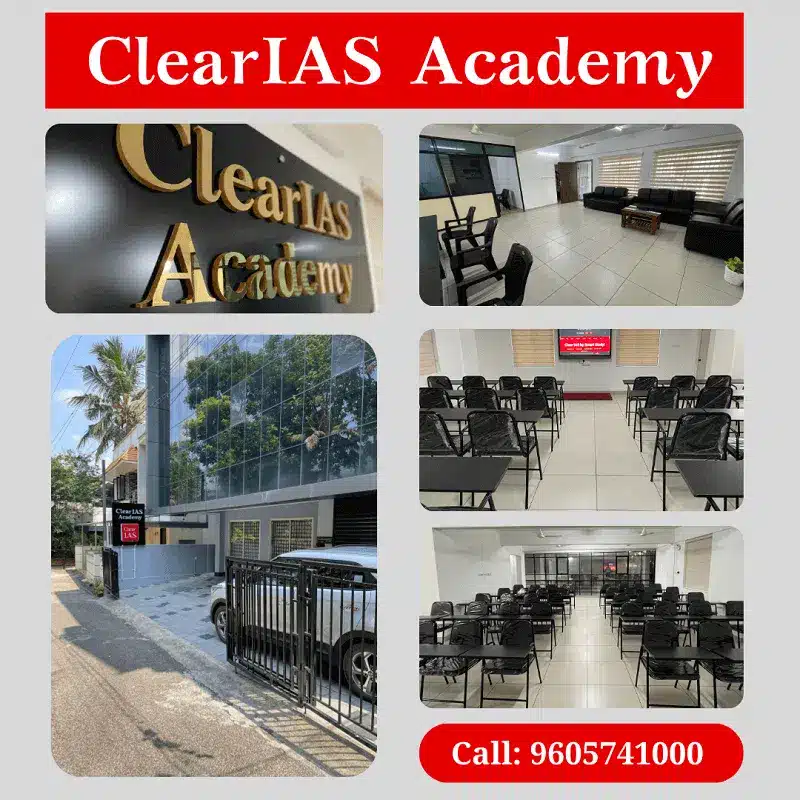
ClearIAS conducts offline classes at its Kowdiar campus in Thiruvananthapuram, Kerala. The physical learning environment can help aspirants create a stable routine, obtain direct academic support and study among peers who are working towards the same examination—provided the classroom is followed by independent revision and practice.
- Prepare before class: Read the syllabus heading and review the preceding topic so the new lesson has context.
- Listen for the framework: Identify the concept, relevance, examples and interconnections instead of transcribing every sentence.
- Clarify conceptual barriers: Use direct interaction to resolve doubts that prevent further understanding.
- Consolidate within forty-eight hours: Convert the lesson into short notes, PYQ links and recall prompts while it is still fresh.
- Use the peer group selectively: Share useful discussion and motivation without allowing comparison or rumours to distort your plan.
Manage a multi-year course intelligently
Run Three Connected Calendars: Classroom, Consolidation and Target Year
The classroom calendar tells you what is being taught. Your consolidation calendar determines whether that learning becomes usable. The target-year calendar ensures that Optional, CSAT, Essay, Mains writing and test practice mature before the 2029 examination cycle becomes urgent.
- Classroom calendar: Track the current subject sequence, class attendance, materials and announced assessments.
- Consolidation calendar: Reserve weekly slots for revision, PYQs, short notes, MCQs, answer writing and doubt closure.
- Target-year calendar: Set milestone dates for core GS completion, Optional coverage, revision rounds and examination simulations.
- Quarterly audit: Compare planned outputs with completed outputs and reduce commitments that are creating persistent backlog.
- Final-cycle transition: Shift progressively from broad learning to compressed revision, mixed tests and examination-specific execution.
A classroom week that produces learning
Connect Weekday Classes, Saturday Current Affairs and Sunday Testing
Published course information describes weekday classes from 7 PM to 9 PM, a Weekly Current Affairs class on Saturday and an online mock exam on Sunday. Confirm the latest timetable before joining, and organise the week so that every class is revised and every test produces an improvement decision.
Weekday Learning
Attend actively, capture the core structure and reserve a brief same-day recall period rather than postponing all revision to the weekend.
Saturday Integration
Connect current developments with the static syllabus, identify relevant examples and avoid maintaining a disconnected news archive.
Sunday Testing
Attempt the mock under realistic conditions and examine knowledge gaps, misreading, elimination errors, risk-taking and time management.
Weekly Reset
Close small backlogs, plan the next subject block and decide which mistakes require revision before another test is attempted.
What the Topmost Plan brings together
Classroom Teaching Supported by Recordings, Resources, Tests and Guidance
The 2029 course is positioned as an integrated General Studies pathway. It combines physical classes with digital support so that classroom explanations can be revised, practised and connected with the different demands of Prelims, Mains and Interview.
Offline GS Classes
Follow a planned English-medium classroom sequence covering the major General Studies areas.
Recorded Backup
Use available recordings for purposeful revision, reinforcement or continuity after an unavoidable missed class.
500+ Expert Video Classes
Access the extensive recorded learning base supporting General Studies and related examination skills.
1500+ Topic-wise PDFs
Use organised subject materials for pre-reading, consolidation, note-making and repeated revision.
Prelims Tests and PYQs
Strengthen recall, elimination, judgement and time management through tests and previous-year-question practice.
Current Affairs and CSAT
Develop issue-based understanding and qualifying-paper competence through the support applicable to the batch.
Essay and Mains Writing
Progress from understanding to structured expression through practice, frameworks and evaluation support as applicable.
Mentorship and Direction
Use guidance to prioritise work, diagnose recurring problems and keep a long preparation cycle aligned with 2029.
Classroom learning with digital continuity
Use the ClearIAS Dashboard to Organise Content, Recordings, Tests and Updates
Offline learners also use the ClearIAS digital learning environment. The representative dashboard shows areas such as Content, Live Classes, Attendance and Announcements. This support can help students continue learning beyond the classroom without turning the platform into an unstructured store of unwatched videos and unread PDFs.
- Check official communication: Follow batch announcements, schedule updates and academic instructions through the approved channels.
- Open content in sequence: Use the subject folders and lesson order instead of collecting files from multiple places.
- Replay selectively: Revisit only the weak or missed segment and return quickly to recall, notes or questions.
- Complete assigned practice: Attempt tests and exercises before consulting explanations wherever possible.
- Maintain an independent tracker: Record completion, revisions, tests, answers and unresolved doubts outside the platform as well.

Integrated General Studies preparation
Build Knowledge and Examination Skills Across the UPSC CSE Cycle
General Studies preparation must connect subject knowledge with question interpretation, recall, analysis and communication. A full-syllabus course should help you understand both what the syllabus contains and how the same topic can be tested differently in Prelims, Mains and Interview. Optional-subject preparation remains separate unless expressly included elsewhere.
Core General Studies Areas
- Indian Polity and Constitution
- Indian Economy
- Ancient, Medieval and Modern History
- Art and Culture
- Indian and World Geography
- Environment and Ecology
- Science and Technology
- International Relations
- Governance and Social Justice
- Internal Security
- Disaster Management
- Ethics, Integrity and Aptitude
Application and Exam Skills
- Current-affairs integration
- UPSC syllabus mapping
- Previous-year-question analysis
- Prelims elimination and risk control
- CSAT practice and qualifying strategy
- Mains answer structuring
- Essay planning and development
- Use of examples, data and case studies
- Maps, diagrams and presentation
- Revision-note compression
- Mock-test diagnosis
- Interview-oriented issue understanding
Protect the advantage of starting early
Four Risks That Can Weaken a Multi-Year Classroom Preparation Plan
The greatest danger in a 2029 course is not lack of access; it is losing urgency because the examination appears distant. Build safeguards before small delays become a year of unfinished classes, scattered current affairs and postponed practice.
Passive Attendance
Counter it by completing a short recall, revision or question task after every class rather than treating presence as mastery.
Expanding Backlog
Set a recovery ceiling. When missed classes exceed that limit, temporarily reduce optional resources and clear the core sequence.
Current-Affairs Hoarding
Organise issues by syllabus relevance and retain only usable facts, arguments and examples instead of preserving every daily update.
Delayed Optional and Writing
Assign milestone dates for Optional coverage and begin low-volume answer writing well before the final Mains-focused phase.
Course-fit guidance
Who Should Choose the UPSC 2029 Offline Classroom Course?
Undergraduates Planning Ahead
Suitable when 2029 aligns with graduation and eligibility, and the student can balance college requirements with steady evening preparation.
Beginners Seeking a Guided Foundation
Relevant for aspirants who want a planned entry into the syllabus, sources, current affairs, testing and examination skills.
Local Working Professionals
Potentially suitable when work hours, commute and recovery time permit reliable attendance and additional self-study.
Learners Needing External Accountability
Useful when a physical classroom, direct interaction and a visible peer routine improve consistency more than flexible access.
Assess the full offline commitment
Calculate Time, Living Costs and Study Conditions Before Moving to Trivandrum
The displayed tuition fee does not represent the complete cost of offline preparation. An aspirant relocating for a course valid until 2029 should assess accommodation, food, transport, study space, health, family commitments and the ability to maintain the arrangement over an extended period.
Daily Travel Load
Estimate door-to-door commute, traffic variability and the effect on meals, sleep, revision and weekend recovery.
Long-Term Living Budget
Include rent, deposit, food, utilities, internet, transport, books, medical expenses and examination travel.
Independent Study Environment
Choose accommodation that supports quiet revision and mock exams. The value of classroom learning depends on what happens outside class.
Campus and Mentor Conversation
Where practical, visit the centre and clarify the current batch, timetable, facilities, digital access and expectations before relocating.
Compare all three 2029 plans
Choose the Learning Mode You Can Sustain Until the 2029 Attempt
The target-year pathway is integrated across the three modes. The main differences are timetable flexibility, live interaction, physical attendance, location dependence and the level of external structure.
Unbeatable Plan
Ultimate Plan Most Recommended
Topmost Plan
Reduce the expectation gap
Use Demo Classes for Teaching Fit and a Campus Visit for Classroom Fit
Public demos help you judge explanation style, conceptual clarity, pacing and examination linkage. Dashboard previews help you understand digital organisation. A mentor conversation or campus visit is still necessary to confirm the present batch schedule, classroom process, seat status, facilities and onboarding arrangements.
What the Demo Page Can Show
- Teaching clarity and pace
- Conceptual explanation
- Prelims–Mains linkage
- PYQ and elimination orientation
- Laptop and mobile interface
- Subject-folder organisation
- Sequential lesson presentation
- Compatibility with the teaching style
What You Should Confirm Separately
- Current batch commencement
- Daily and weekly timetable
- Faculty and subject sequence
- Seat availability
- Mentorship and doubt process
- Recording availability
- Tests and evaluation method
- Campus and onboarding arrangements
Frequently asked questions
FAQs About the ClearIAS UPSC 2029 Offline Classroom Course
What is the current fee for the UPSC 2029 Offline Classroom Course?
The current ClearIAS course catalogue lists a regular fee of ₹2,05,000 and a current fee of ₹1,09,999. The final payable amount, taxes, offer availability and payment options shown on the purchase page at enrolment will apply.
Where are the classroom classes conducted?
Offline classes are conducted at ClearIAS Academy in Kowdiar, Thiruvananthapuram, Kerala. Confirm the current batch venue and campus-visit process with the admissions team.
What is the published weekly schedule?
Published course information describes Monday-to-Friday classes from 7 PM to 9 PM, a Saturday Weekly Current Affairs class and a Sunday online mock exam. Timings can change, so verify the latest timetable before admission.
How long is the UPSC 2029 course valid?
The published validity is until 31 October 2029. Further extension may be available on payment of the applicable extension fee, subject to the policy in force at that time.
Do classroom students receive recorded support?
The program is described as live classroom learning plus recorded classes. Recordings can support revision and continuity, but exact availability, upload timing and access rules should be confirmed for the selected batch.
Can the digital course contents be accessed on a mobile phone or laptop?
Available digital resources can be accessed through the approved ClearIAS learning platform on supported devices. The current login, app and device rules shown during onboarding will prevail.
Is this course suitable for a complete beginner?
Yes, it can suit beginners who want a guided foundation and direct classroom interaction. Beginners must still revise independently, practise questions and gradually build self-directed learning ability.
Is the 2029 batch suitable for undergraduate students?
It can be suitable when 2029 aligns with graduation and UPSC eligibility, and when college attendance, examinations and commute leave enough time for classroom participation and revision.
Can working professionals join the offline course?
Yes, when office hours, commute and personal responsibilities permit reliable attendance and additional study. Those with unpredictable schedules should compare the Live Online and Recorded Online plans.
Does the course include an Optional subject?
This is a General Studies full-syllabus course. Optional-subject preparation should be planned separately unless the purchase page explicitly states otherwise.
Are current affairs, CSAT, Essay and tests included?
Published program information lists current-affairs classes, CSAT, Essay, Prelims tests, previous-year-question retake exams and related support. Confirm the exact format, frequency and availability for the current batch.
How should an early starter manage current affairs until 2029?
Focus first on understanding recurring issues and linking them to syllabus topics. Maintain concise issue-based notes and avoid preserving every daily event for several years.
Should I begin answer writing immediately?
Begin gradually after acquiring basic topic knowledge. Start with outlines and short answers, then increase quality, speed and test simulation over the preparation cycle.
Should I visit the campus before paying or relocating?
A visit is advisable when practical, particularly for students relocating or making a major long-term financial commitment. Contact admissions first to confirm the visit process and batch details.
Does admission guarantee selection in UPSC CSE?
No course can guarantee selection, rank or marks. Outcomes depend on eligibility, sustained effort, revision, practice, judgement and performance in the examination.
Ready to begin a structured 2029 pathway?
Join the Topmost Plan When the Campus Commitment Fits Your Target Year
Select this course when 2029 is the right attempt year and when face-to-face teaching, direct support and classroom accountability justify regular attendance in Kowdiar. Enter with milestone dates for GS, Optional, revision, CSAT, answer writing and test practice—not merely a plan to attend classes.
ClearIAS UPSC 2029 Offline CoursePrelims · Mains · Interview
English-medium classroom General Studies preparation in Thiruvananthapuram with recorded support and a long-term integrated learning system.
₹1,09,999
Campus: ClearIAS Academy, Kowdiar
Validity: Until 31 October 2029
Admission: Digital activation follows successful payment; classroom onboarding follows the current batch instructions
Need help with admission or a campus visit?
Talk to a ClearIAS Course Mentor
Ask about the current 2029 classroom batch, timetable, seat availability, campus visit, fee, instalments, validity, digital access, inclusions or whether an online plan would suit you better.
Campus: A Street, Kanaka Nagar, Opposite Raj Bhavan, Kowdiar P.O., Thiruvananthapuram, Kerala – 695003
ClearIAS does not guarantee selection, rank or marks. Course content, faculty, batch status, schedules, support formats, tests, fees, offers, taxes, validity, extension rules, campus arrangements and platform features may change. Verify the final information on the relevant enrolment page and with the admissions team before purchase or relocation.